
Best Online Business Bank Accounts in 2026: Easiest Options for Startups and Small Businesses

Best Online Business Bank Accounts in 2026: Easiest to Open
Opening a business bank account used to mean scheduling an in-person appointment, bringing stacks of paperwork, and waiting days or even weeks for approval. In 2026, that is no longer the case.
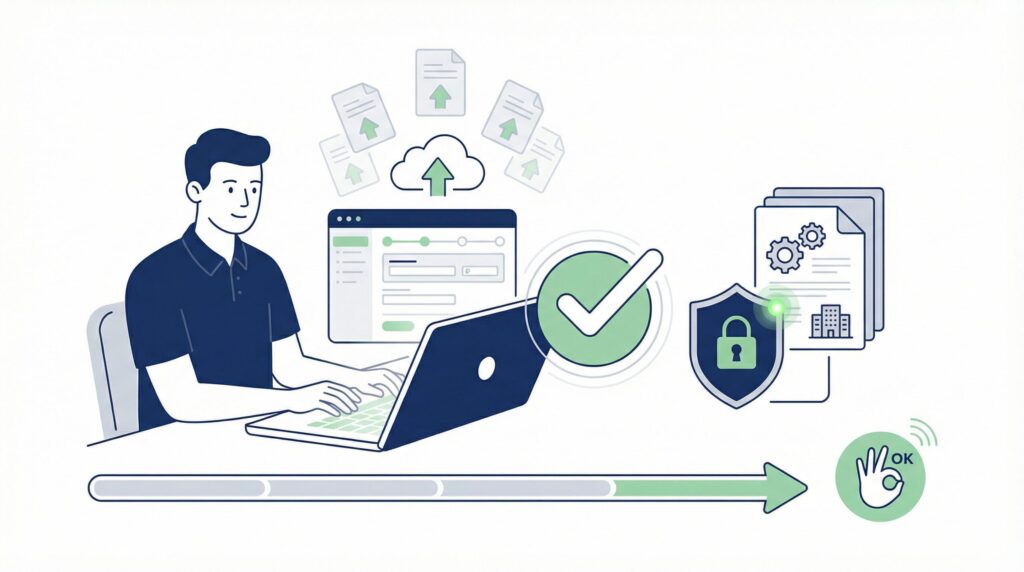
The easiest business bank accounts to open today are typically online-first platforms designed for startups and small businesses. Many allow you to complete the entire process remotely, upload documents digitally, and receive approval within days, sometimes even the same day.
However, “easy” does not mean the same thing for everyone.
For a freelancer operating as an LLC, ease might mean minimal documentation and no monthly fees. For a tech startup, it might mean fast onboarding, seamless Stripe integration, and no branch visit required. For international founders, it may come down to whether the bank accepts non-U.S. residents.
In this guide, we break down:
- What makes a business bank account easy to open
- The best online business bank accounts in 2026
- The easiest options for startups
- What documents you actually need
- Common mistakes to avoid
Choosing the right online small business bank account can save time, reduce fees, and prevent future compliance headaches. The key is understanding which platform fits your structure and growth plans.
What Makes a Business Bank Account Easy to Open?
When people search for the easiest business bank account to open, they are usually looking for speed, simplicity, and minimal friction. But “easy” can mean different things depending on your business structure, residency status, and growth stage.
Here are the key factors that determine how simple the process really is (check also SBA business banking guidance).
1. Fully online application
The most straightforward online small business bank accounts allow you to complete everything digitally. That includes:
- Identity verification
- Document upload
- Electronic signatures
- Account approval notifications
There is no branch visit and no physical paperwork. For founders working remotely or internationally, this alone can make a major difference.
2. Minimal documentation requirements
Traditional banks often require extensive documentation and in-person verification. In contrast, many modern fintech-focused banks streamline onboarding.
Typically required documents may include:
- Employer Identification Number (EIN)
- Articles of incorporation or formation
- Operating agreement (for LLCs)
- Government-issued ID
The easiest business bank accounts clearly outline these requirements upfront and avoid surprise document requests later.
3. Fast approval timelines
Some online platforms review applications within 24 to 72 hours, provided documents are complete and verification checks pass.
Speed often depends on:
- Business structure
- Industry type
- Country of residence
- Compliance risk profile
A low-risk domestic LLC with clear ownership is generally approved faster than a complex multi-owner structure.
4. No minimum deposit or balance requirement
For early-stage founders, an “easy” account often means low financial barriers. Many of the best online business bank accounts in 2026:
- Have no minimum opening deposit
- Require no ongoing minimum balance
- Charge no monthly maintenance fees
This is especially important for startups managing early cash flow carefully.
5. Founder-friendly policies
Some banks are specifically built for startups and digital businesses. They may offer:
- API integrations
- Built-in accounting tools
- Stripe or PayPal compatibility
- Virtual debit cards
Ease is not just about opening the account. It is about how smoothly the account fits into daily operations.
6. Acceptance of non-U.S. founders
For international entrepreneurs forming U.S. LLCs, the biggest obstacle is often residency status. Not all banks accept non-resident founders.
The easiest business bank account for international owners is one that:
- Accepts foreign passports
- Does not require a U.S. Social Security Number
- Supports remote verification
This alone can narrow down your options significantly.
An account may be easy for one founder and difficult for another. The real question is not just which bank is easiest, it is which one is easiest for your specific business structure.
Best Online Business Bank Accounts in 2026 (Ranked)
There is no single “best” business bank account for everyone. The right choice depends on your company type, ownership structure, and operational needs.
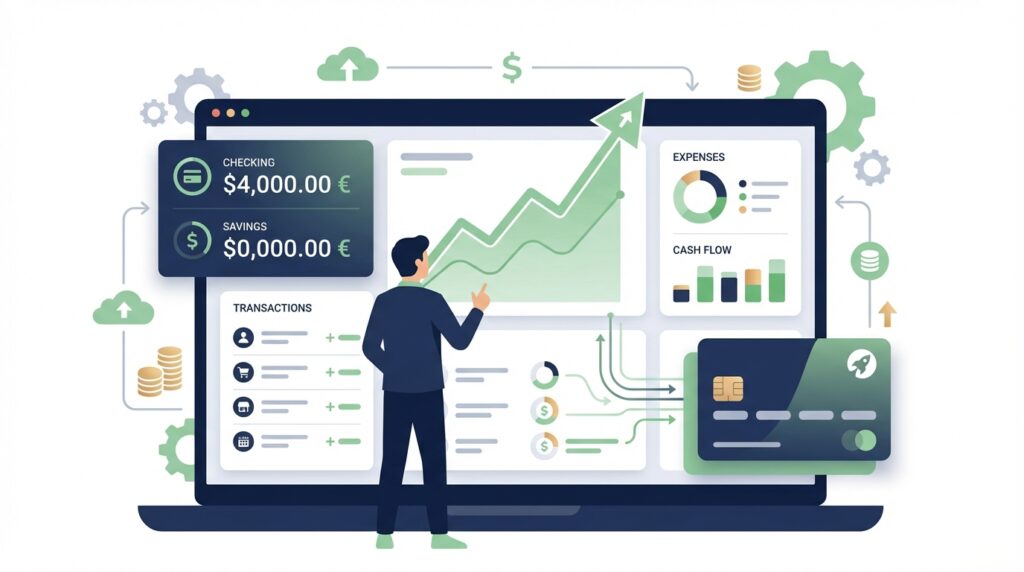
Below are some of the most popular and accessible online small business bank accounts in 2026, particularly known for streamlined onboarding and startup-friendly features.
1. Mercury – Best for Startups and Tech Founders
Mercury has become a common choice among early-stage startups and digital-first companies. It is designed for U.S.-registered businesses, especially venture-backed or technology-driven companies.
Why it stands out:
- Fully online application
- No monthly fees
- No minimum balance requirement
- Strong integration with Stripe and accounting tools
Mercury is often considered one of the easiest business bank accounts to open for U.S. LLCs and corporations, including some non-resident founders, depending on compliance review.
However, approval is not automatic. Industry type and ownership structure still matter.
2. Relay – Best for Small Teams and Expense Management
Unlike a banking solution like wittix, Relay focuses on helping small businesses manage multiple accounts and team spending more efficiently.
Key features:
- Multiple checking accounts under one dashboard
- Role-based team access
- No monthly maintenance fee (standard plan)
- Clean online interface
Relay can be a strong option for growing teams that want better cash flow segmentation without dealing with traditional bank friction.
3. Bluevine – Best for Interest and Traditional Hybrid Features
Bluevine combines online banking convenience with some features associated with traditional banking.
Highlights:
- Competitive interest on qualifying balances
- Online application process
- Integrated lending products
For businesses maintaining higher balances, the interest component can be attractive. However, qualification criteria may be stricter than some fintech-only platforms.
4. Novo – Best for Freelancers and E-commerce Sellers
Novo is often chosen by solo founders, freelancers, and e-commerce operators.
What makes it appealing:
- Simple onboarding process
- No minimum balance
- Useful integrations for online sellers
For small, lean businesses that do not require complex banking features, Novo is often viewed as one of the easiest online small business checking accounts to manage.
5. Chase Business Complete – Best for Hybrid Traditional Banking
Although not a fintech startup, Chase remains relevant for founders who want the credibility of a major bank combined with digital tools.
Advantages:
- Broad branch network
- Established reputation
- Integrated payment processing
Opening an account may involve more steps than purely digital banks, but some founders prefer the stability and full-service environment.
Comparative Table – Best Online Business Bank Accounts (2026)
| Bank / Platform | Ease of Opening | Who It’s Best For | Key Features | Fees |
|---|---|---|---|---|
| Mercury | ⭐⭐⭐⭐☆ | Startups & tech companies | Online onboarding, Stripe & accounting integrations, no monthly fees | Low to none |
| Relay | ⭐⭐⭐⭐☆ | Small teams & growing businesses | Multiple checking accounts, role-based access | No monthly fee (standard) |
| Bluevine | ⭐⭐⭐☆☆ | Businesses with higher balances | Online banking + competitive interest | Varies by balance |
| Novo | ⭐⭐⭐⭐☆ | Freelancers & e-commerce | Simple application, no minimum balance | No monthly fee |
| Chase Business Complete | ⭐⭐☆☆☆ | Hybrid traditional + online users | Wide branch network, full banking suite | Monthly maintenance (waivable) |
Each of these options serves a different type of business owner. The easiest business bank account to open in 2026 will depend on your structure, risk profile, and whether you are a U.S. resident or international founder.
Which Is the Easiest Business Bank Account to Open?
When founders search for the easiest business bank account to open, they are usually prioritizing speed and minimal friction. In practice, the answer depends less on the brand and more on your business profile.
That said, certain online-first platforms consistently stand out for streamlined onboarding.
If you are a U.S.-based LLC or Corporation
For domestic founders with:
- A registered U.S. entity
- A valid EIN
- Clear ownership structure
- Low-risk business activity
Online fintech-focused banks are generally the easiest route.
Accounts built specifically for startups often allow you to:
- Complete onboarding entirely online
- Upload documents digitally
- Avoid branch visits
- Receive approval within a few business days
In straightforward cases, this can be significantly faster than opening an account at a traditional bank.
If you are an international founder
For non-U.S. residents forming a U.S. LLC, the situation becomes more complex.
The easiest business bank account in this scenario is typically one that:
- Accepts foreign passports
- Does not require a Social Security Number
- Allows remote verification
- Understands online business models
Not all banks support non-resident founders. Even among online platforms, approval depends heavily on compliance review and business activity.
International applicants should expect closer scrutiny and possible follow-up documentation requests.
If speed is your top priority
To maximize approval speed:
- Ensure all formation documents are finalized
- Confirm your EIN is active
- Use consistent information across documents
- Clearly define your business activity
Incomplete or inconsistent applications are one of the most common causes of delay.
In simple cases, some online small business bank accounts can be approved within 24 to 72 hours. More complex structures may take longer.
Important reality check
No bank guarantees instant approval. All financial institutions must comply with Know Your Customer (KYC) and Anti-Money Laundering (AML) regulations.
Even the easiest business bank accounts still require identity verification and risk assessment.
The fastest outcome usually comes from a clean, transparent business structure with complete documentation.
Best Business Bank Account for Startups in 2026
Startups have different needs from traditional small businesses. Speed matters, but so do scalability, integrations, and investor readiness.
The best business bank account for startups is not just easy to open — it must also support growth.
What startups typically need
Unlike freelancers or small retail shops, startups often require:
- Multiple founders with defined ownership percentages
- Clean cap table documentation
- Integration with payment processors
- Compatibility with accounting software
- Ability to issue multiple debit cards
- Clear transaction categorization
A startup-friendly bank understands these structural realities.
Venture-backed vs bootstrapped startups
Venture-backed startups often prioritize:
- Institutional credibility
- Easy investor wiring
- Clean compliance review
- Dedicated support channels
Bootstrapped startups may focus more on:
- No monthly fees
- No minimum balance
- Simple onboarding
- Low transaction costs
The “best” online business banking platform depends on which of these categories you fall into.
Key features that matter for startups
If you are evaluating the best online business bank account for startups, consider:
- Integration ecosystem
Does the bank integrate with Stripe, PayPal, QuickBooks, Xero, or other accounting tools? - Scalability
Can the account handle increasing transaction volume without hidden limitations? - Team access control
Can you assign role-based permissions for employees or contractors? - International compatibility
If you work with overseas contractors or clients, how easy are international wires? - Compliance stability
Some startups experience account freezes due to unclear business descriptions. Transparency in your application reduces this risk.
Why online-first banks often win for startups
Many traditional banks were not built for digital-native companies. Online business banking platforms tend to:
- Understand SaaS and e-commerce models
- Accept remote founders
- Offer cleaner digital dashboards
- Provide faster onboarding
For founders who value efficiency and tech integration, online-first options are usually more aligned with startup operations.
Choosing the best business bank account for startups in 2026 is about matching the bank’s compliance model and technology stack to your growth strategy, not just opening the account quickly.
Online Small Business Checking Explained
Many founders use the terms “business bank account” and “business checking account” interchangeably. In practice, most online small business bank accounts are checking accounts designed for day-to-day operations.
Understanding this distinction helps you choose the right product.
What is a business checking account?
A business checking account is designed for:
- Receiving payments
- Paying vendors
- Managing payroll
- Covering operating expenses
- Handling daily transactions
Unlike savings accounts, checking accounts prioritize liquidity and transaction flexibility rather than long-term interest growth.
Most online small business checking accounts provide:
- Debit cards
- ACH transfers
- Wire transfers
- Bill payment tools
- Transaction tracking
This is the operational core of your company’s financial activity.
Online vs traditional business checking
Traditional banks typically require:
- In-person appointments
- Physical paperwork
- Higher minimum deposits
Online small business banking platforms have simplified this model.
With an online-first account, you can usually:
- Apply remotely
- Upload documents digitally
- Receive approval notifications electronically
- Manage everything through a web dashboard or app
For digital businesses, this model often aligns better with remote operations.
When do you need a business checking account?
If you operate as:
- An LLC
- A corporation
- A registered partnership
You should separate business and personal finances.
A dedicated online small business bank account helps:
- Maintain legal separation
- Simplify accounting
- Improve tax reporting
- Build business credibility
Even sole proprietors benefit from separating transactions to reduce accounting confusion.
Checking vs savings for small businesses
Some founders open both:
- A checking account for operational expenses
- A savings account for tax reserves or retained earnings
However, your primary focus when starting out should be a reliable business checking account that supports incoming and outgoing transactions efficiently.
In short, the best online business bank account for most founders is, at its core, a well-structured online small business checking account that supports daily activity without unnecessary friction.
Documents Required to Open an Online Business Bank Account
No matter how modern or streamlined a bank is, opening a business account still involves regulatory checks. Financial institutions must comply with Know Your Customer and Anti-Money Laundering regulations, which means identity and business verification are mandatory.
That said, most online small business bank accounts follow a predictable document structure.
1. Employer Identification Number (EIN)
For U.S.-registered businesses, an EIN issued by the IRS is typically required.
Banks use the EIN to:
- Verify your business identity
- Link tax reporting
- Confirm registration status
If you recently formed your company, make sure the EIN is active and correctly issued before applying. Inconsistencies between your EIN record and formation documents can delay approval.
2. Formation documents
You will usually need to upload official company formation documents, such as:
- Articles of Organization (for LLCs)
- Articles of Incorporation (for corporations)
- Certificate of Formation
These documents confirm the legal existence of your business entity.
3. Operating agreement or corporate bylaws
For LLCs, many banks request an operating agreement that outlines:
- Ownership percentages
- Member roles
- Management structure
Corporations may be asked for bylaws or a board resolution authorizing account opening.
Even if not always mandatory, having these documents ready reduces friction.
4. Government-issued identification
Each beneficial owner — typically anyone owning 25% or more of the company — must provide identification.
This usually includes:
- Passport
- Driver’s license
- National ID (depending on residency status)
Online verification often involves uploading photos and sometimes completing a short identity confirmation process.
5. Proof of address
Some banks request proof of:
- Personal residential address
- Business address
This can include utility bills, lease agreements, or official registration documents.
Requirements vary depending on whether you are a U.S. resident or an international founder.
6. Business activity description
Many applications require a clear explanation of your business model.
Providing a concise, accurate description reduces the risk of compliance delays. Vague or inconsistent descriptions are a common cause of extended review.
Special note for non-U.S. founders
If you are not a U.S. resident:
- Some banks may require additional documentation
- A U.S. mailing address may be necessary
- Social Security Number requirements vary
Choosing a bank that explicitly supports international founders can prevent unnecessary rejections.
Preparing all documents in advance is one of the simplest ways to make the business bank account opening process faster and smoother.
Mistakes to Avoid When Choosing a Business Bank
Opening the easiest business bank account is only the first step. Choosing the wrong one can create operational friction, unexpected fees, or even account freezes later on.
Here are some common mistakes founders make when selecting an online small business bank account.
1. Choosing based on speed alone
Fast approval is attractive, especially for new businesses. However, selecting a bank purely because onboarding is quick can lead to problems later.
Consider:
- Transaction limits
- International wire policies
- Integration compatibility
- Customer support quality
An account that is easy to open but difficult to operate at scale can slow your growth.
2. Ignoring fee structures
Some accounts advertise “no monthly fees” but charge for:
- Excess transactions
- Incoming wires
- Outgoing international transfers
- Cash deposits
Before opening an account, review the full fee schedule carefully. For startups handling digital payments, ACH and card processing compatibility matter more than branch services.
3. Providing unclear business descriptions
Banks perform compliance checks to evaluate risk.
If your application includes vague language such as “consulting” without further explanation, it may trigger additional review. Be specific about:
- Your industry
- Revenue model
- Target customers
Clarity reduces the risk of account delays or restrictions.
4. Overlooking international transaction policies
If you work with international contractors or clients, verify:
- Wire transfer limits
- Foreign exchange fees
- Supported currencies
Not all online small business banking platforms are optimized for cross-border activity.
5. Not separating personal and business finances
Some early-stage founders delay opening a business account and use personal accounts instead. This can create:
- Tax complications
- Legal liability issues
- Accounting confusion
Even a simple online small business checking account is preferable to mixing finances.
6. Failing to consider future growth
An account that works for a solo founder may not work for a team of five or a funded startup.
Ask yourself:
- Can I add team members easily?
- Does the bank support higher transaction volumes?
- Will this still work when revenue scales?
Planning ahead avoids the need to switch banks during a growth phase.
Choosing the best online business bank account is not just about opening one quickly. It is about selecting a platform that supports your structure, compliance needs, and long-term strategy.
Frequently Asked Questions About Easy Business Bank Accounts
What is the easiest business bank account to open?
In 2026, the easiest business bank accounts to open are typically online-first platforms designed for startups and small businesses. They allow fully remote applications, digital document uploads, and faster approval timelines compared to traditional banks.
However, ease depends on your structure. A simple U.S.-based LLC with one owner is usually approved faster than a complex multi-owner or international entity.
Can I open a business bank account completely online?
Yes. Many online small business bank accounts allow you to complete the entire process remotely, including identity verification and document submission.
That said, approval is still subject to compliance review. Even fully digital banks must verify ownership and business legitimacy before activating the account.
Do I need an EIN to open an online small business bank account?
For most U.S. LLCs and corporations, an Employer Identification Number (EIN) is required.
Sole proprietors may sometimes use a Social Security Number, but many founders prefer obtaining an EIN to maintain separation between personal and business finances.
What is the best business bank account for startups?
The best business bank account for startups is usually one that combines:
– Fast online onboarding
– No monthly fees
– Strong integration with accounting and payment tools
– Scalability as revenue grows
Tech-focused online banking platforms are often well suited for early-stage companies.
Can a non-U.S. resident open a U.S. business bank account online?
Some online banks allow non-U.S. founders to open accounts for U.S.-registered companies. Requirements vary, and additional documentation may be requested.
Not all banks support international founders, so choosing a platform that clearly outlines non-resident eligibility is important.
How long does it take to open a business bank account?
For straightforward cases, some online banks approve accounts within 24 to 72 hours. More complex ownership structures or compliance reviews can extend this timeline.
Preparation and complete documentation significantly improve speed.
Final Perspective
The easiest business bank account to open in 2026 is one that aligns with your company structure, ownership profile, and operational needs. Online small business banking has made the process faster and more accessible, but compliance requirements still apply.
Speed is achievable, especially for clean, well-documented entities, but choosing the right account requires looking beyond approval time and focusing on long-term functionality.

I really appreciate the minimal documentation approach. As someone who’s in the early stages of building my business, it’s a relief to know that I can avoid a ton of red tape while still accessing the banking services I need.
With pleasure !