EB-2 NIW Premium Processing in 2026: $2,965 Fee, 45 Business Days & When It’s Worth It


Last verified: September 5, 2026. EB-2 NIW Premium Processing costs $2,965 and places an eligible Form I-140 National Interest Waiver petition on a 45-business-day USCIS premium-processing timeframe. But the service does not put your entire Green Card case on a fast track.
The decision question is therefore not simply “Do I want a faster I-140?” It is: Will knowing the I-140 result sooner change what I can do next, or am I still waiting on a bigger bottleneck such as visa-number availability?
Direct answer: Premium Processing can have high practical value when I-140 adjudication is the stage holding up a time-sensitive immigration or career decision. When the Visa Bulletin is the real bottleneck, the $2,965 may buy earlier certainty without producing an earlier Green Card.
This guide explains what the fee actually buys, what USCIS must do within 45 business days, how an RFE changes the clock, whether the service appears to increase RFE risk, and how to decide whether upgrading a pending I-140 is worth the cost. It is general educational information, not individualized legal advice.
What does the $2,965 Premium Processing fee actually buy?
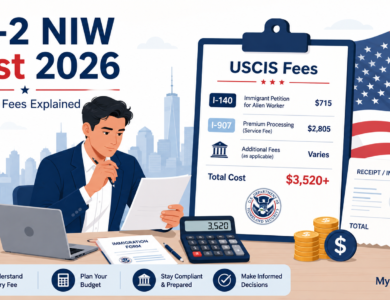
Premium Processing is requested with Form I-907, Request for Premium Processing Service. For an EB-2 NIW petition, the $2,965 fee is additional to the other filing fees that apply to the underlying case. It is not the total cost of an EB-2 NIW filing.
The current fee took effect on March 1, 2026 after DHS made its biennial inflation adjustment. The prior $2,805 amount is obsolete for requests postmarked on or after that effective date. If you are budgeting the entire case rather than the optional speed service, use our EB-2 NIW cost guide.
Official rule: 8 CFR 106.4 currently sets a $2,965 Premium Processing fee for an EB-2 petition involving a National Interest Waiver and a 45-business-day processing timeframe.
Practical meaning: You are paying for a defined USCIS action window on the I-140, not for approval.
Decision impact: The fee is most valuable when faster I-140 action changes your next available decision. If another stage remains blocked regardless of the I-140 result, the value is mainly faster certainty.
The Premium Processing Value Test: 4 questions before you pay
Before spending $2,965, run your case through these four questions:
- Is I-140 adjudication actually my current bottleneck?
- Is visa availability likely to be a bigger bottleneck?
- What decision becomes possible if I know my I-140 result sooner?
- Is that earlier certainty worth $2,965 to me?
If faster I-140 adjudicative action changes your next available immigration step, a status-related planning decision, or an important career choice, Premium Processing has more practical value. If a long visa-number wait remains regardless of how quickly USCIS acts on the I-140, Premium Processing may change your certainty date without materially changing your Green Card date.
For the full end-to-end picture, including I-140 adjudication, Visa Bulletin waiting and the final Green Card stage, see our EB-2 NIW processing-time guide.
What Premium Processing speeds up and what it does not
| Stage | Directly expedited by NIW I-907? |
|---|---|
| I-140 NIW adjudicative action | Yes |
| Visa Bulletin movement | No |
| Your priority date | No |
| Form I-485 processing | No |
| NVC processing | No |
| Consular interview availability | No |
| Green Card production | No |
This distinction is the fastest way to avoid overpaying for the wrong problem. An approved I-140 can be important, but it does not advance a priority date or create an immigrant visa number.
The 45-business-day rule: what USCIS must actually do
For an EB-2 NIW, the Premium Processing timeframe is 45 business days, not 45 calendar days. Under 8 CFR 106.4, a business day is a day the federal government is open for business. Weekends, federally observed holidays and qualifying government closures are excluded.
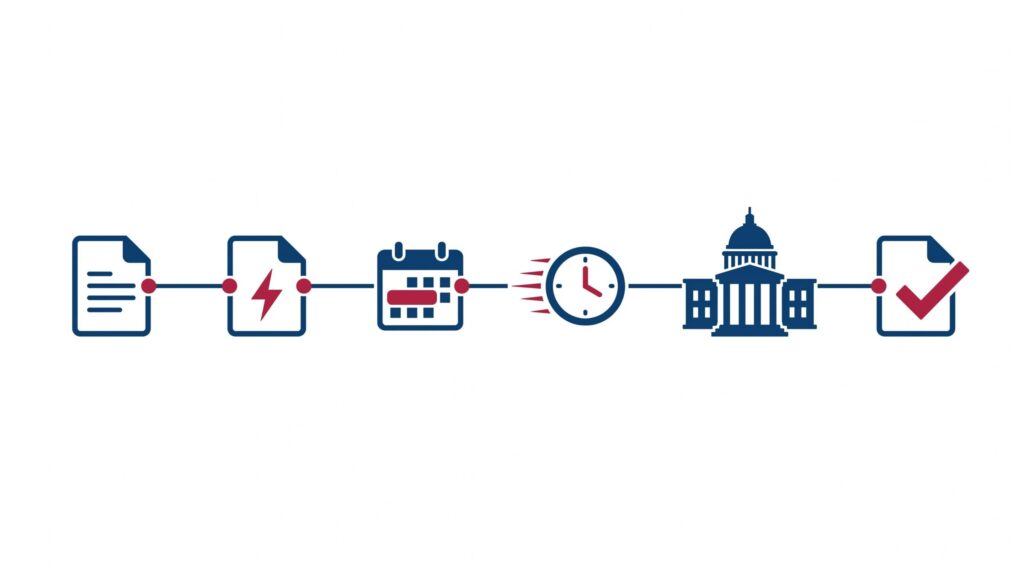
The regulation does not promise an approval within that period. USCIS satisfies the premium-processing action requirement by issuing one of the specified adjudicative actions, including:
- An approval notice;
- A denial notice;
- A Request for Evidence (RFE); or
- A Notice of Intent to Deny (NOID).
The regulation also contains a fraud-or-misrepresentation investigation exception to the normal premium-processing timing and refund framework. If USCIS otherwise fails to take the required adjudicative action within the applicable timeframe, the rule provides for a refund of the Premium Processing fee while USCIS continues processing the case.
Do not translate “45 business days” into “final result in 45 business days.” An RFE on business day 44 can satisfy the initial Premium Processing timeframe.
What happens if USCIS sends an RFE near day 45?
An RFE or NOID stops the Premium Processing timeframe. After USCIS receives the response, the regulation provides for the premium-processing clock to recommence with a new applicable timeframe. For an EB-2 NIW, that means a new 45-business-day timeframe under the current rule.
So a case can remain in Premium Processing and still take longer than one 45-business-day cycle from I-907 receipt to final outcome. The first cycle may end with an RFE; the applicant then needs time to prepare a response; and a new premium timeframe begins when USCIS receives that response.
If you receive an NIW RFE, the key issue is the substance of USCIS’s objections rather than the Premium Processing clock itself. Our separate EB-2 NIW RFE guide covers that topic in depth.
Does EB-2 NIW Premium Processing increase RFE risk?
In our September 2026 review, we did not find a public USCIS dataset that lets applicants reliably establish that Premium Processing itself causes a higher EB-2 NIW RFE rate. USCIS applies the same substantive NIW eligibility standard whether the I-140 uses regular or premium processing.
That does not mean the concern should be dismissed. Some practitioner commentary and applicant discussions report a perception that premium cases receive more RFEs and ask whether a tighter adjudication window changes officer behavior. But those observations do not control for case strength, filing date, officer assignment, field, service workload, changing adjudication trends or the fact that people with RFEs may be more likely to post about them.
| Evidence type | What it can tell you | What it cannot prove |
|---|---|---|
| USCIS rules | The same legal NIW standard applies; Premium changes the service timeframe | They do not publish a causal Premium-vs-regular NIW RFE comparison |
| Practitioner experience | Can identify patterns lawyers believe they are seeing in their caseloads | Cannot by itself prove Premium Processing causes RFEs |
| Reddit / forums | Useful for identifying applicant concerns and recent experiences | Self-selected anecdotes are not a representative rate |
| Crowdsourced trackers | Can show reported timing patterns in the submitted sample | Cannot replace USCIS data or establish causation |
The more defensible decision is to ask whether your petition is ready for adjudication under the same substantive NIW standard. If you are still uncertain about the underlying eligibility case, review our EB-2 NIW requirements guide. If the proposed endeavor itself needs work, use our proposed endeavor guide.
Is EB-2 NIW Premium Processing worth it for you?
There is no universal yes-or-no answer. The value changes with your priority date, country of chargeability, budget, case posture and reason for wanting an earlier I-140 result.
| Situation | Likely practical value | Why |
|---|---|---|
| Rest of World / other chargeability where EB-2 visa availability is favorable | Potentially higher | If I-140 adjudication is a material remaining bottleneck, faster action may affect what can happen next. |
| India with a long EB-2 visa-number wait | Often lower for total Green Card speed | Premium cannot create visa availability. It may still provide earlier petition certainty. |
| China with a priority date near the applicable cutoff | Case-dependent | Both I-140 status and Visa Bulletin movement may matter; the cutoff can remain the larger constraint. |
| You need I-140 certainty for a concrete career or business decision | Potentially higher | The value may be the date on which you can make that decision, even if permanent residence comes later. |
| You have no time-sensitive reason | Often lower | Regular processing may preserve the $2,965 while you continue monitoring the case. |
| The $2,965 would strain your budget | Lower unless timing has substantial value | The premium fee is optional and does not replace other case costs. |
| Your regular I-140 is already pending | Flexible | You may be able to wait and upgrade later if the value of faster adjudication increases. |
| You need an I-140 outcome before a separate status or life event | Potentially higher | Earlier adjudicative action may reduce uncertainty, but the legal consequences of that event require case-specific analysis. |
| You expect Premium Processing to speed an already-filed I-485 | No value for that purpose | I-907 Premium Processing for the NIW I-140 does not accelerate I-485 adjudication. |
How the September 2026 Visa Bulletin affects the value calculation
The September 2026 Visa Bulletin illustrates why the same $2,965 purchase can have very different practical value. In the EB-2 Final Action chart, the general worldwide column, Mexico and the Philippines are Current; China-mainland born has a September 1, 2021 cutoff; and India is Unavailable for final action. These dates can change, retrogress or become unavailable in a later bulletin.
If visa availability is already the stage preventing final action, Premium Processing cannot remove that constraint. If visa availability is favorable and I-140 adjudication is the material uncertainty affecting your next step, the same service may matter much more.

For adjustment of status, do not assume that a Dates for Filing entry automatically authorizes an I-485 filing. USCIS determines which Visa Bulletin chart employment-based adjustment applicants may use for the relevant month.
Can you upgrade a pending EB-2 NIW I-140 later?
Yes, an eligible pending underlying benefit request can generally be upgraded with Form I-907 as long as USCIS has not made a final decision. The current Form I-907 instructions expressly allow a Premium Processing request to be filed after the eligible underlying benefit request has already been filed.
This gives applicants a useful option: you do not necessarily have to decide on Premium Processing on the same day you file Form I-140. You can begin in regular processing and reassess later if your timeline, budget or need for certainty changes.
When upgrading a pending case, use the underlying I-140 receipt information exactly as required and follow the current USCIS Form I-907 filing instructions and filing location. Addresses and filing methods can change, so do not rely on an old article or assume the original I-140 filing address is automatically correct for the I-907.
For NIW Premium Processing, the regulation provides that the timeframe begins when USCIS has received the prescribed form, required fee and the prerequisites for adjudication. Filing I-907 later does not create a new priority date and does not change the substantive NIW standard.
Premium Processing and concurrent I-485 filing: avoid this misconception
Do not assume that Form I-140 must always be approved before Form I-485 can be filed. In employment-based cases, concurrent filing can be possible when visa availability and the USCIS filing-chart rules permit it and the applicant is otherwise eligible for adjustment of status. An I-485 may also be filed in some eligible situations while an I-140 remains pending.
Premium Processing does not create that eligibility. It only accelerates adjudicative action on the eligible I-140. Whether an I-485 can be filed — or approved — depends on visa availability, the monthly USCIS chart determination, adjustment eligibility and the posture of the individual case.
Premium Processing does not make an NIW petition stronger
The legal test does not become easier because you paid for Premium Processing. USCIS still evaluates whether the petition satisfies the EB-2 threshold and the National Interest Waiver framework. Premium changes speed and predictability of USCIS action, not the evidence standard.
That is why filing faster is not a substitute for filing a well-supported case. If material evidence, the proposed endeavor or the Dhanasar analysis is not ready, the relevant question is not whether to buy Premium Processing; it is whether the petition is ready to be adjudicated.
What to check before paying the $2,965 fee
- Confirm the current USCIS fee and I-907 instructions. The fee is $2,965 as of September 5, 2026, but dynamic filing information should always be rechecked immediately before submission.
- Check whether I-140 adjudication is actually your bottleneck. If visa availability is the slower clock, Premium Processing cannot remove it.
- Check the current EB-2 Visa Bulletin and, for adjustment applicants, the USCIS chart determination for the month.
- Name the decision that earlier I-140 action would unlock. If you cannot identify one, you may be buying certainty rather than a faster immigration outcome.
- Separate case readiness from case speed. Premium Processing does not lower the NIW evidentiary standard or eliminate the possibility of an RFE or denial.
If those checks show that faster I-140 adjudicative action materially changes what you can do next, Premium Processing may have meaningful value. If they show that visa availability or another later stage remains the controlling bottleneck, regular processing may preserve $2,965 while producing a similar ultimate Green Card timeline.