
What Happens After the U.S. Citizenship Interview? N-652 Decisions

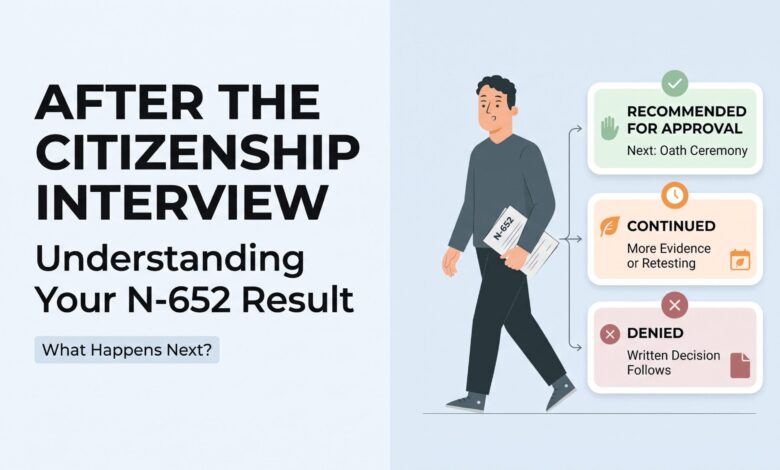
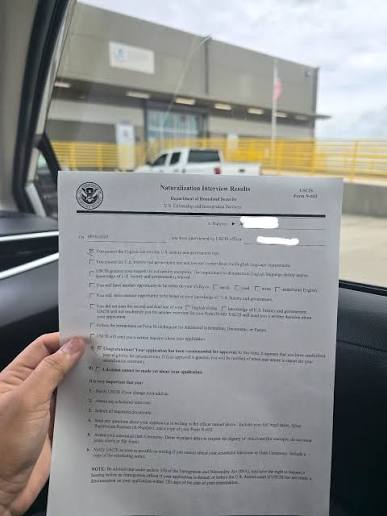
Last verified: July 28, 2026. After a U.S. citizenship interview, the USCIS officer gives or sends the applicant a Notice of Examination Results, commonly called Form N-652. The notice may say the application is recommended for approval, that a decision cannot yet be made, or that another step is required. It is not always the final naturalization decision.
The most important next step is to read every checked box and written instruction on the applicant’s own notice. Two people interviewed on the same day may receive different follow-up requirements. This guide explains the usual N-652 outcomes, what deadlines matter and when the applicant actually becomes a U.S. citizen.
N-652 citizenship interview results at a glance
| Result or instruction | What it generally means | What to do next |
|---|---|---|
| Application recommended for approval | The officer believes the applicant has established eligibility, subject to final review | Keep checking the case and wait for the oath notice |
| Decision cannot yet be made | USCIS needs more review, evidence, testing or supervisory action | Follow every written instruction and deadline |
| English or civics test not passed | The failed portion normally must be retaken | Prepare for the reexamination, usually within 60 to 90 days |
| Additional evidence required | USCIS needs specified documents before deciding | Answer the request completely by its deadline |
| Form N-400 denied | USCIS issued a final adverse decision with reasons | Review Form N-336 and legal options immediately |
An interview result should not be interpreted only from a case-status message or from what the officer said verbally. The paper notice and any later written decision control. Keep the original N-652 with the complete N-400 file.
What is Form N-652?
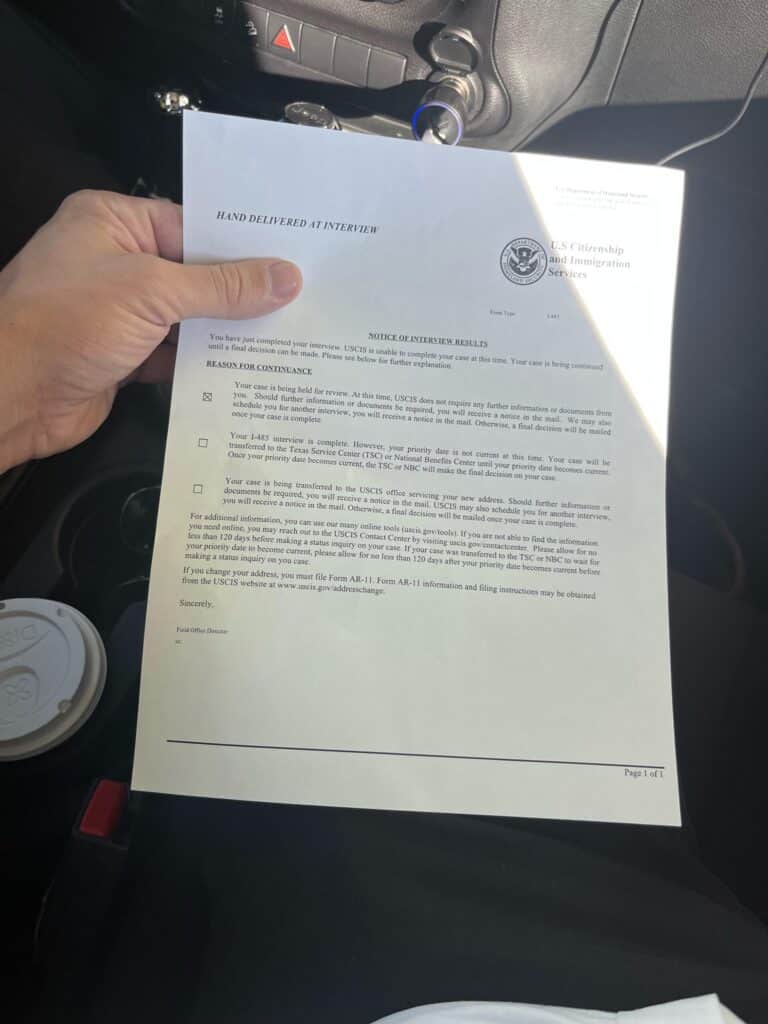
Form N-652 records the results of the naturalization examination. USCIS normally provides it at the end of the interview, although a later notice may provide the formal decision or next appointment. It can identify the English and civics test results and state whether the application is being recommended for approval or continued.
The N-652 is different from the interview appointment notice, a request for evidence, the formal N-400 approval or denial notice, and the oath ceremony notice. Applicants should not discard any of these documents merely because the online account shows an update.
Result 1: recommended for approval
A recommendation for approval is the most favorable interview result. It generally means the officer concluded that the applicant passed the required tests and established naturalization eligibility based on the information available. Some offices may complete a final approval quickly; others require supervisory or background-check completion.
Recommended for approval does not itself make the applicant a U.S. citizen. Naturalization is completed only after the applicant takes the Oath of Allegiance at an authorized ceremony.
Until the oath, the applicant remains a lawful permanent resident and must continue complying with the obligations that apply to that status. The applicant must also report material changes when required, including certain travel, arrests or other developments that occur after the interview.
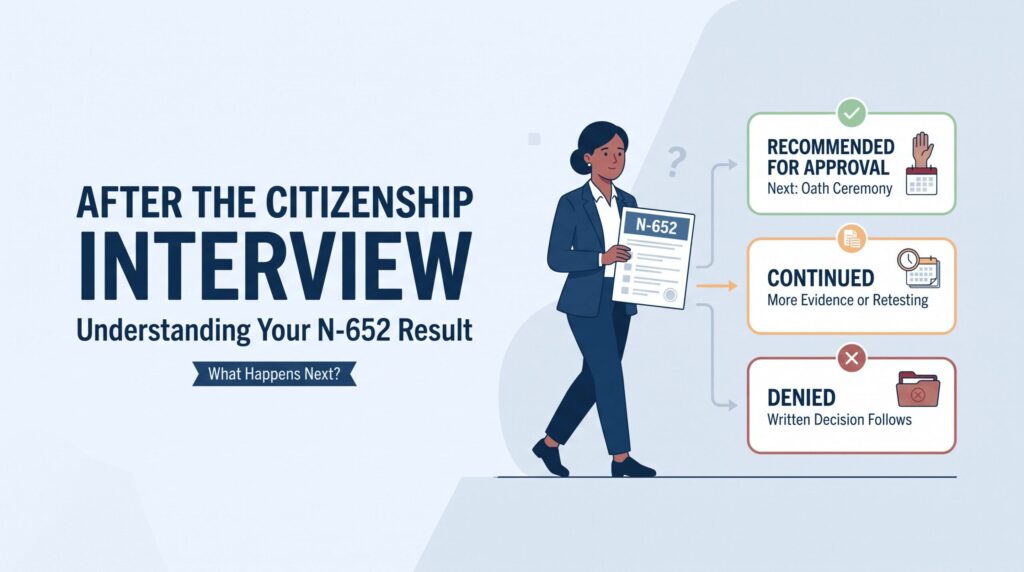
What to do after a recommendation for approval
- Save the N-652 and download or print later USCIS notices.
- Check the USCIS online account and mail at the address on file.
- Submit any address change promptly through the method USCIS requires.
- Avoid missing the oath ceremony notice or its response deadline.
- Bring the requested documents, including the Green Card, to the ceremony.
- Review any events after the interview that must be disclosed before taking the oath.
How long after the citizenship interview is the oath ceremony?
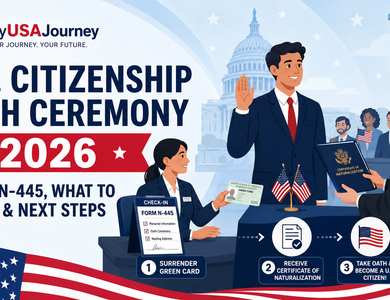
There is no single nationwide number of days between interview and oath. Some field offices offer same-day administrative ceremonies when the application is approved and scheduling permits. Other applicants receive Form N-445, Notice of Naturalization Oath Ceremony, later by mail or through the online account. Local ceremony capacity, final review and unresolved checks can affect timing.
If the applicant cannot attend, the N-445 instructions explain how to request a new date. Ignoring the notice can jeopardize the application. Before the ceremony, answer the questionnaire on the notice truthfully and bring the documents listed. USCIS generally collects the Permanent Resident Card at naturalization.
Result 2: a decision cannot yet be made
A continued case does not automatically mean denial. USCIS may be unable to decide at the interview because additional evidence is needed, a test portion must be repeated, the officer needs supervisory review, or a background or eligibility issue remains unresolved. The N-652 should identify the immediate reason or state that written instructions will follow.
- The applicant passed the tests, but the eligibility review is incomplete.
- A travel, tax, marital, criminal or immigration-history issue needs documentation.
- The officer needs an original or certified record that was not available.
- USCIS must review a correction made to Form N-400 during the interview.
- The applicant did not pass English, civics or both on the first attempt.
- A pending background, identity or supervisory check prevents an immediate decision.
Do not send random documents without instructions. An unsolicited submission can be separated from the file or fail to address the actual concern. Wait for the precise request unless the N-652 itself directs the applicant to provide specified evidence.
If USCIS requests more evidence after the interview
USCIS may issue a written Request for Evidence or another notice identifying what is missing and where to send it. The response should be organized around each item requested, include the correct receipt information and arrive by the stated deadline. A complete response is more useful than a large bundle of unexplained records.
- Read the entire request, including the response address or upload instructions.
- Create a checklist matching every requested item.
- Obtain certified dispositions, tax transcripts or other official records when requested.
- Use complete English translations with the translator’s certification when required.
- Keep a full copy of the response and reliable proof of timely submission.
- Do not alter, backdate or conceal a record that appears unfavorable.
A request involving arrests, prior immigration applications, possible false claims to citizenship, voting, taxes, Selective Service, extended travel or the validity of permanent residence can have consequences beyond a simple missing document. Individual advice from a licensed immigration attorney or Department of Justice-accredited representative may be appropriate before responding.
What happens after failing the English or civics test?
Applicants ordinarily receive two opportunities to satisfy the English and civics requirements for one N-400 application. If the applicant fails a portion at the first examination, USCIS generally schedules a reexamination between 60 and 90 days later. The officer retests only the portion that was failed, unless another eligibility issue also requires follow-up.
For example, an applicant who passed English but failed civics normally retakes civics only. An applicant who passed speaking and civics but failed reading normally retakes the reading portion. Applicants should use the official study materials for the test version determined by their N-400 filing date.
Our 2025 U.S. Civics Test guide explains the 128-question pool and passing rules. Applicants who qualify under 50/20, 55/15 or 65/20 should also review our naturalization test exceptions guide before the second appointment.
If the applicant misses or fails the reexamination
Failure to appear without a valid explanation can lead to administrative closure or denial under the applicable rules and notices. If the applicant fails the required test portion after the second attempt, USCIS generally denies the N-400. The denial notice should explain the result and the right to request a hearing.
The 120-day decision rule after the naturalization interview
USCIS policy states that the agency has 120 days from the date of the applicant’s initial naturalization interview to issue a decision. This period runs from the first examination, not from biometrics, filing or a later reexamination. Many cases are decided sooner, but the rule becomes important when a case remains unresolved.
If USCIS has not made a decision within 120 days after the initial examination, federal law may permit the applicant to seek judicial action in the appropriate U.S. district court under INA 336(b). A federal case is a serious procedural step: the court may decide the naturalization application or remand it to USCIS with instructions. Applicants should obtain case-specific legal advice before filing rather than treating it as a routine online status inquiry.
What to do while an N-400 decision is pending
- Calculate 120 days from the date of the initial interview and keep the appointment evidence.
- Check both the USCIS account and physical mail, including notices sent to counsel.
- Verify that USCIS has the current address.
- Respond promptly to every evidence request or appointment notice.
- Keep proof of all submissions and delivery.
- Use the USCIS case inquiry tools when the case is outside the posted processing framework.
- Seek legal advice before litigation or if the delay involves a substantive eligibility concern.
Repeated inquiries do not replace a required response or appeal. Likewise, a pending case does not authorize the applicant to ignore Green Card evidence, international travel risks or other immigration obligations. The N-400 filing receipt may extend evidence of permanent resident status under current USCIS policy, but the applicant should read the receipt and current agency guidance.
Result 3: Form N-400 is denied
A denial is a formal written decision, not merely a checked box saying that a decision cannot be made. The notice should identify the factual and legal reasons. Common grounds include failure of the required tests after two attempts, insufficient continuous residence or physical presence, lack of good moral character, unresolved tax or support obligations, disqualifying conduct, failure to establish lawful admission for permanent residence, or abandonment of the application process.
Some denials expose an issue that may also affect the person’s Green Card or other immigration history. Refiling a new N-400 immediately is not always the right answer. The applicant should first understand whether the problem can be corrected with time or evidence, whether the decision contains an error, and whether a hearing request is safer than a new application.
Form N-336: requesting a hearing after denial
An applicant may generally request a hearing on a denied N-400 by filing Form N-336, Request for a Hearing on a Decision in Naturalization Proceedings. USCIS generally requires filing within 30 calendar days after the applicant receives the denial. USCIS policy recognizes additional mailing time when the decision was served by mail; applicants should follow the denial notice and current N-336 instructions rather than deliberately waiting for the outer limit.
The hearing is usually conducted by an officer other than the officer who made the original decision. The review can address the denial, receive qualifying new evidence and retest English or civics when the denial was based on testing. The request should explain why the decision was wrong or what evidence resolves the stated ground; it should not simply say that the applicant disagrees.
| Choice | May be appropriate when | Important caution |
|---|---|---|
| File Form N-336 | The denial may contain legal, factual or evidentiary error | Short filing deadline and current fee/instructions apply |
| File a new N-400 later | A curable time-based issue will be resolved before refiling | A new filing does not erase prior answers or the denial |
| Seek judicial review after the hearing process | Administrative review remains adverse and legal grounds support a court case | Federal litigation requires case-specific legal analysis |
N-652 versus other naturalization notices
| Notice | Purpose |
|---|---|
| N-652 | Records naturalization examination results and immediate next steps |
| Evidence request | Identifies documents or information USCIS still needs |
| Reexamination notice | Schedules the second English or civics testing opportunity |
| N-445 | Schedules the Oath of Allegiance ceremony and includes a final questionnaire |
| N-400 denial notice | Provides the final reasons for denial and review rights |
| N-336 receipt or hearing notice | Confirms or schedules administrative review of the denial |
Notice names and delivery methods can vary with case processing. The safest practice is to preserve the entire sequence so an adviser or USCIS can see what was requested, when it was served and how the applicant responded.
Can USCIS change the result after recommending approval?
Yes. A recommendation is subject to final review, and USCIS can discover information before the oath that affects eligibility. The applicant must remain eligible through naturalization. A post-interview arrest, misleading answer, undisclosed trip or newly identified issue can delay the ceremony or lead USCIS to reopen its analysis.
This does not mean ordinary applicants should panic after a favorable N-652. It means they should keep records, answer final questions truthfully and avoid assuming the case is complete before the oath. If a serious event occurs, obtain advice before the ceremony rather than hiding it.
Common mistakes after the citizenship interview
- Treating a recommendation for approval as completed citizenship.
- Ignoring a checked box or handwritten instruction on Form N-652.
- Missing an evidence, reexamination or oath notice after moving.
- Sending an incomplete evidence response without proof of delivery.
- Studying the wrong portion or wrong version of the naturalization test.
- Counting 120 days from the wrong event.
- Missing the N-336 deadline while deciding whether to refile.
- Refiling without understanding whether the denial reveals a broader immigration risk.
- Failing to disclose a material event that occurred before the oath.
When to seek legal help
A straightforward favorable N-652 usually does not require counsel. Legal review becomes more important when USCIS questions how permanent residence was obtained, alleges false testimony or fraud, identifies criminal or voting history, disputes taxes or support, raises Selective Service issues, questions long travel, issues a denial, or leaves the case undecided beyond 120 days.
Use a licensed immigration attorney or a Department of Justice-accredited representative. A notario, document preparer or consultant cannot provide legal advice unless separately authorized. No representative can guarantee approval, an oath date or the outcome of an N-336 hearing.
A practical post-interview checklist
- Photograph or scan every page of the N-652.
- Mark which tests were passed and which portion, if any, must be repeated.
- Calendar every date stated on the notice or later request.
- Keep the N-400 copy, interview documents and new notices together.
- Update the mailing address promptly if it changes.
- Prepare only the evidence or test portion actually required.
- Track 120 days from the initial interview if no decision arrives.
- Review the N-445 carefully and disclose relevant changes before the oath.
- After the oath, check the Certificate of Naturalization for errors before leaving when possible.
Applicants preparing for the interview rather than waiting for a result can use our U.S. citizenship interview questions guide and N-400 interview document checklist. Our complete naturalization guide connects eligibility, filing, interview and oath.
Frequently asked questions
Does Form N-652 mean my citizenship application is approved?
Not always. A recommendation for approval is favorable, but naturalization is not complete until final approval and the Oath of Allegiance. Other N-652 results may continue the case for evidence, review or retesting.
What does “a decision cannot yet be made” mean?
It means USCIS did not complete the decision at the interview. The agency may need evidence, a second test, supervisory review, background-check completion or additional eligibility analysis.
How long does USCIS have to decide after the interview?
USCIS policy states that it has 120 days from the initial naturalization interview to issue a decision. Applicants considering court action after that period should obtain case-specific legal advice.
When will I receive my oath ceremony notice?
Timing varies by field office and case. Some approved applicants receive a same-day ceremony, while others later receive Form N-445 by mail or through their USCIS account.
Am I a U.S. citizen after the officer recommends approval?
No. You generally become a U.S. citizen only after taking the Oath of Allegiance at an authorized naturalization ceremony.
What happens if I failed only the civics test?
USCIS normally schedules a reexamination within 60 to 90 days and retests only the failed portion. Use the official materials for the civics test version tied to your N-400 filing date.
Can USCIS ask for documents after the citizenship interview?
Yes. USCIS may request specified evidence before deciding. Follow the written request, respond by the deadline and keep a complete copy with proof of submission.
What happens if USCIS does not decide within 120 days?
Federal law may allow the applicant to seek action in the appropriate U.S. district court under INA 336(b). Because the court may decide the case or return it to USCIS, legal advice is strongly recommended.
How do I appeal a denied Form N-400?
The usual administrative step is Form N-336, a request for a hearing. It generally must be filed within 30 calendar days after receiving the denial, subject to the current notice and mailing rules.
Should I file N-336 or submit a new N-400?
It depends on the denial reason. N-336 may address an erroneous decision, while refiling may make sense after a curable time-based issue is resolved. Review the consequences before choosing.
Can I travel while waiting for the oath ceremony?
International travel is not automatically prohibited, but you remain a permanent resident until the oath and must remain eligible. Travel can affect scheduling and must be disclosed when required.
Can an arrest after the interview affect naturalization?
Yes. Eligibility must continue through the oath. An arrest or other material event after the interview should be disclosed as required, and legal advice may be important before the ceremony.
Official USCIS sources
- USCIS Policy Manual: Results of the Naturalization Examination
- USCIS Policy Manual: Hearing and Judicial Review
- USCIS: Form N-336
- USCIS Policy Manual: English and Civics Testing
- USCIS: The Naturalization Interview and Test

4 Comments